I donated my bone marrow to a stranger, and now he is like a brother to me
It is one thing to be told that your stem cells might save someone’s life, and quite another to come face to face with
that person.
The phone call came less than a year after I’d signed up to be a bone marrow donor. I was a match for someone.
“So fast?” was all I could say, at first.
I’d read about a donor who was contacted 10 years after registering with Singapore’s Bone Marrow Donor Programme (BMDP) – so long that he had almost forgotten he was on the list.
I thought a request, if it came at all, would be years away.
I had signed up when a former colleague was diagnosed with leukaemia. I wanted to help her, but unfortunately, we weren’t a match. I ended up matching with someone else instead.
Donor matching is anonymous and kept strictly confidential, so I knew nothing about this person besides the fact that he was a man with leukaemia.
I would like to say I agreed without hesitation. But I thought of every reason I might not be the right person.
I live with high blood pressure, high cholesterol and diabetes. I carry the alpha thalassaemia trait, which disqualifies me from donating blood. And most of all, I am scared of needles.
But I realised I could save a person’s life. And a man I would never meet was, at that moment, hoping a stranger would say yes. So I did, quickly, before I changed my mind.
A small trade
Bone marrow donation is a surgical procedure that collects stem cells directly from the hip bone.
There is also a non-surgical process which collects the same stem cells from the bloodstream, which is what I ended up doing.
But I will not pretend the process that followed was painless. For five days before the donation, I needed booster injections from dreaded needles to encourage my body to produce more stem cells.
On the day itself, the needles were bigger, and it hurt. I spent close to eight hours with tubes in both arms as my cells were collected.
I was tired and stiff for a few days. But later, I realised this: I had spent years thinking about my body mainly in terms of what it could not do.
Yet it turned out that my stem cells, ordinary as the rest of me, could give a stranger years he might not otherwise have had.
I had always filed away life-saving work as something other people did, doctors with the training, the wealthy with the means. It turned out that for me, the price of admission was a handful of injections and a few uncomfortable hours.
It felt like an absurdly small thing to trade for someone’s life.
From stranger to ‘sai loh’
For four years afterwards, that was all he remained to me: a stranger, alive because of something I had done, but otherwise unknown. Then I learnt that donors and recipients could ask to be connected, if both parties agreed, and I contacted BMDP because I wanted to know how he was doing.
That was when I found out he was living in Hong Kong. We arranged to meet there in September 2023.
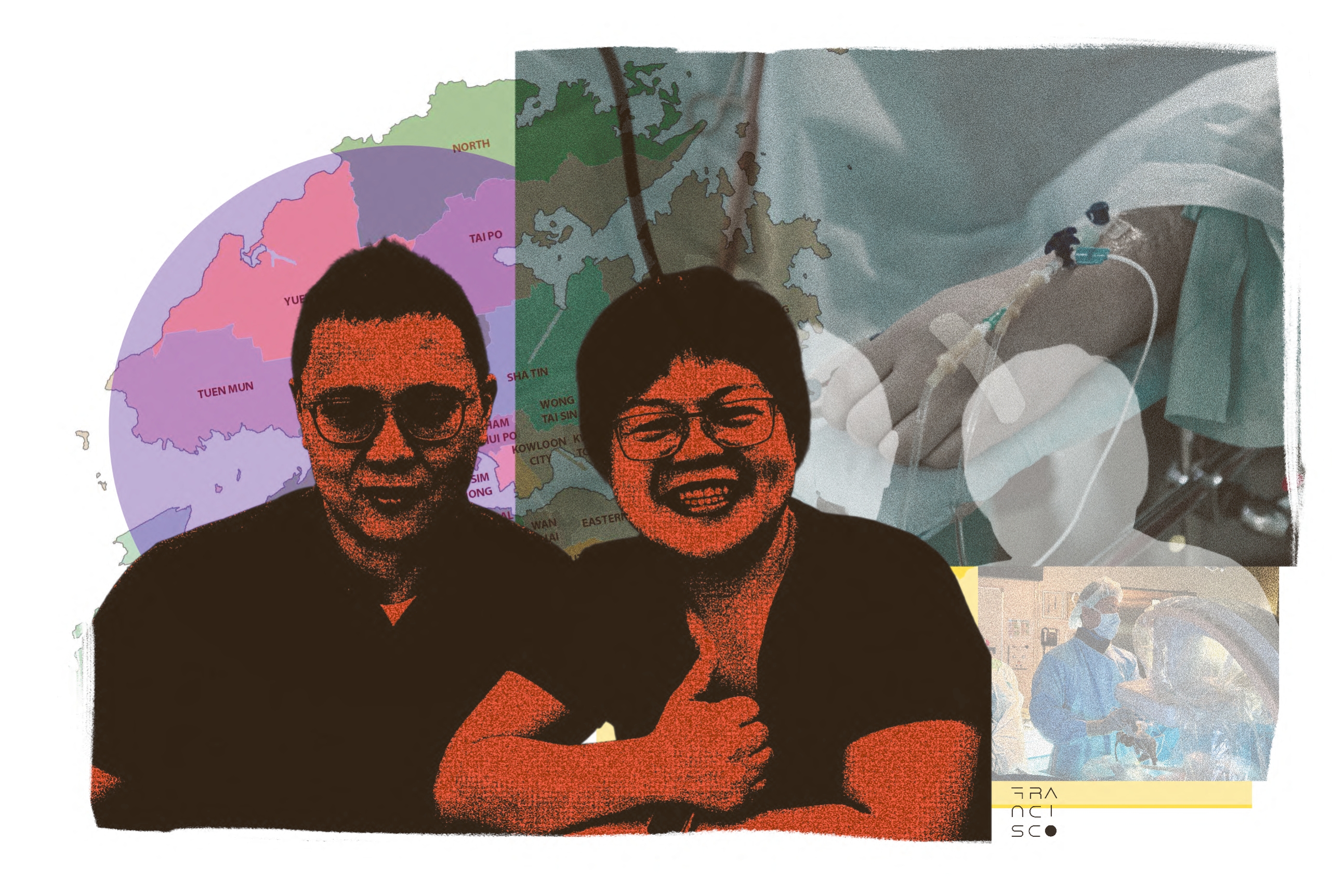
We had exchanged a few messages on WhatsApp beforehand, and he had sent me a photo of himself and his wife so that I would recognise them. I got to the yum cha restaurant early and sat there scanning every couple who walked in, looking for the two faces I had only ever seen on a phone screen.
Then, there he was – the person my cells had gone to, four years earlier. He had gone back to work, no longer needed chemotherapy, and was, as far as I could tell over har gow and turnip cake, living a completely ordinary life. That ordinariness was the most extraordinary thing I had ever witnessed.
I had suggested we keep the meeting short, so they could go to work afterwards.
Instead, both of them took the whole day off.
Over breakfast, and then as they walked me around their city, they told me they still found it hard to believe that a stranger would do this for someone they had never met, and that they had wanted to thank me properly but had not known how to reach me.
I did not have the words for what I felt that day – proud, amazed, a little undone by the plain fact of him sitting across the table, alive. For a moment, I felt like Superman.
We met again in September the following year, this time for a short hike followed by street food in Sham Shui Po, where we gorged on fish balls and egg waffles over hearty conversation.
These days, we message each other at Christmas and during Chinese New Year, and whenever I see news of a typhoon or flooding in Hong Kong, I check in to make sure they are safe. I have taken to teasing him that he is officially my sai loh, Cantonese for “younger brother”, since he is four years younger than me and, quite literally, carries my stem cells.
Somewhere between that first meeting and now, a stranger became family.
It is one thing to be told that your stem cells might save a life. It is another to sit across from that life over dim sum, hear about the life he is leading and walk through his city with him years later.
Nobody had warned me that saying yes to a stranger, at the moment when I was most frightened, would eventually hand me a relationship I could never have planned for.
Caryn See is a secretary at NETS and a volunteer with the Bone Marrow Donor Programme.
Finding Joy is an Opinion series about the things that bring us satisfaction, fulfilment and meaning. If you have a submission, e-mail us at stopinion@sph.com.sg